Gentle Movement That Actually Helps
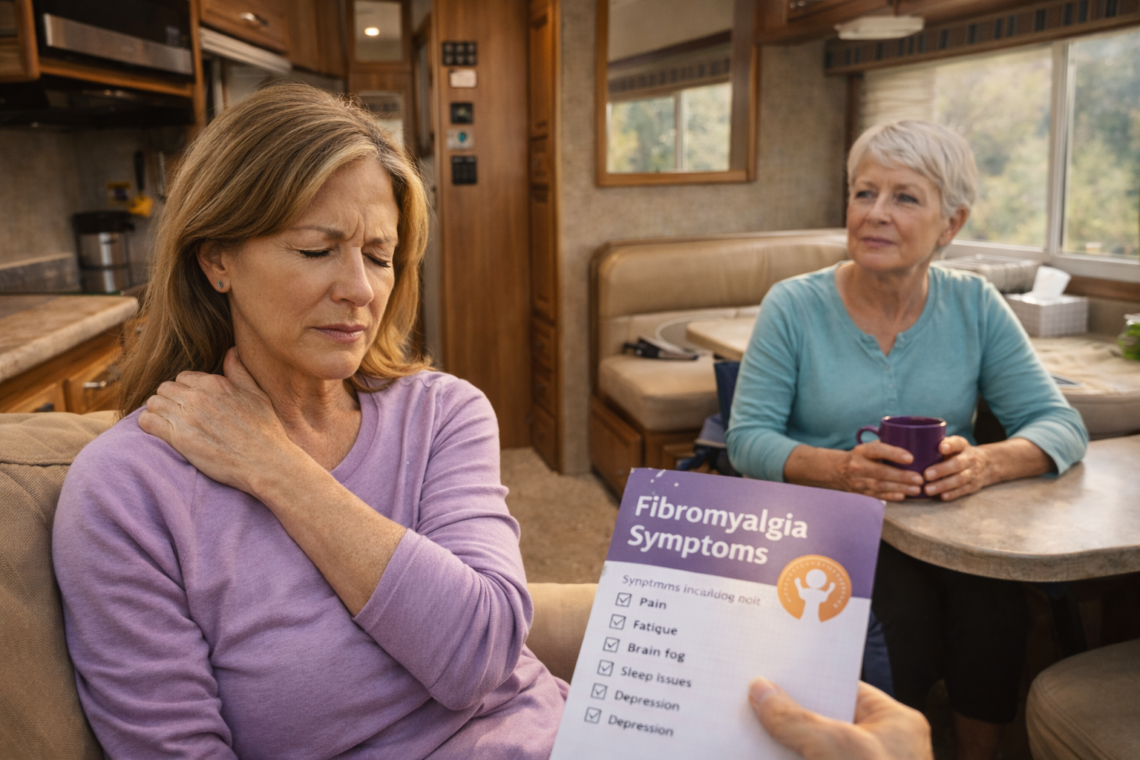
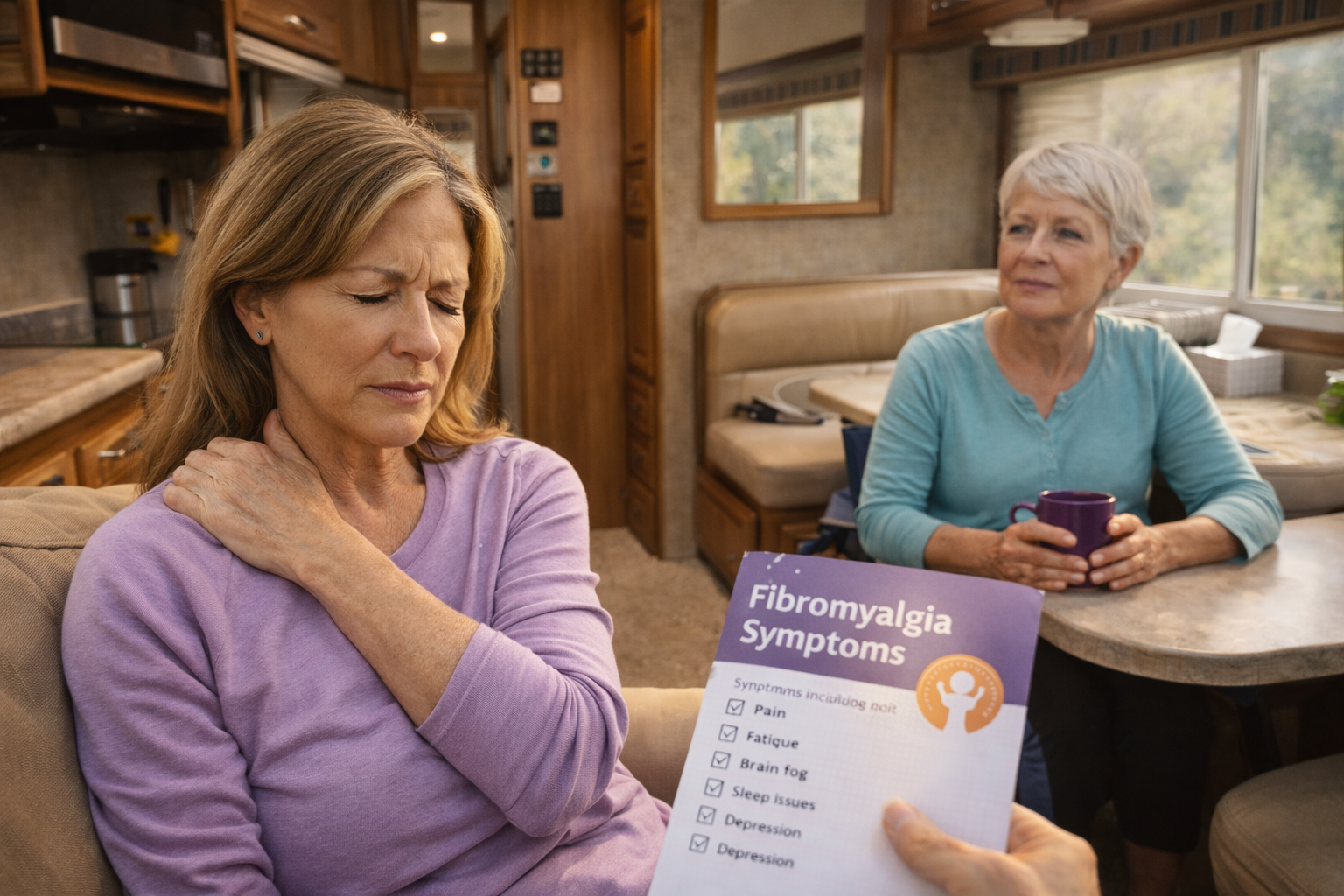
If you’re living with fibromyalgia, you already know—your body doesn’t always follow the “just push through it” advice.
Some days feel okay.
Some days… not so much.
And when pain, fatigue, and stiffness show up uninvited, exercise can feel like the last thing you want to do.
But here’s the good news (and it’s a big one):
The right kind of movement can actually help reduce symptoms—without making you feel worse.
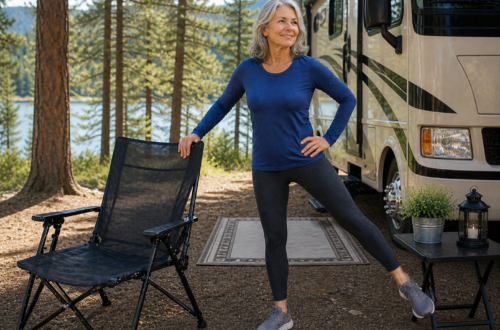
Let’s keep this simple, gentle, and doable—especially for RV life or small spaces.
Why Exercise Helps Fibromyalgia (Even When It Feels Counterintuitive)
With fibromyalgia, your nervous system is more sensitive. That means your body can interpret movement as more intense than it actually is.
But regular, gentle movement can:
✔ Reduce pain over time
✔ Improve sleep quality
✔ Boost energy (yes, really)
✔ Decrease stiffness
✔ Support mood and stress levels
The key is HOW you move—not how hard.
The Golden Rules of Fibromyalgia Exercise
Think of this as your “no-regret” approach:
1. Start way smaller than you think you need
If you feel like you can do 10 minutes… start with 3–5.
2. Stay below your flare threshold
You should finish feeling a little better, not wiped out.
3. Consistency beats intensity
A few minutes daily > one long workout once a week.
4. Give yourself permission to adjust
Bad day? Shorten it. Modify it. Or just breathe and stretch.
5. Be aware of your tender points when selecting exercise and avoid specific exercises
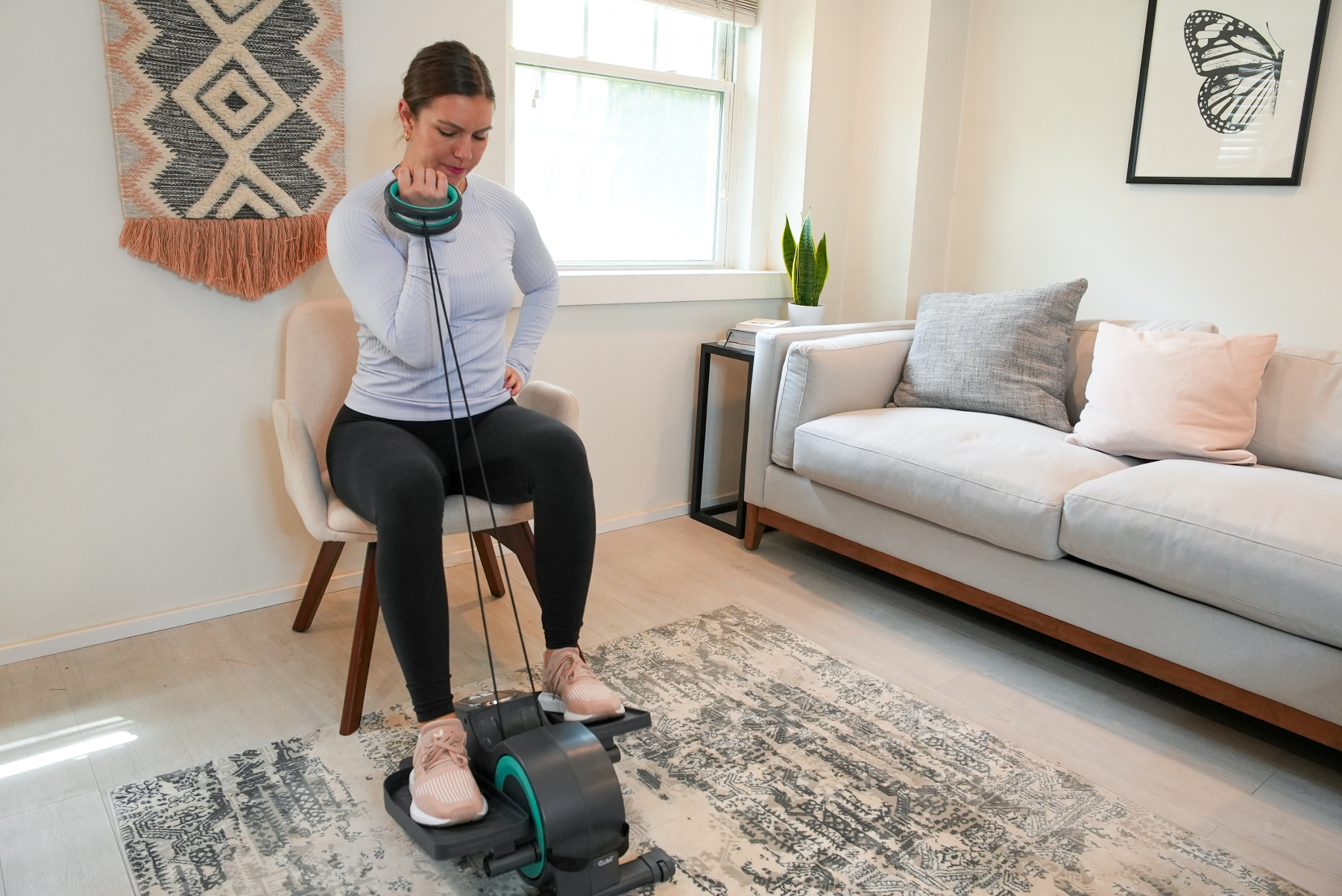
For example, if you have painfully tender gluteal points, exercises such as walking or aquatic exercise would be better choices than riding an exercise bike or using other seated cardio equipment.
Best Types of Exercise for Fibromyalgia
1. Gentle Mobility (Your Daily Go-To)
Perfect for mornings or after sitting.
- Shoulder rolls
- Neck stretches
- Hip circles
- Ankle circles
- Easy torso twists
Why it works: Keeps joints moving without stressing the body.
2. Walking (At Your Own Pace)
Even slow, short walks count.
- Around the campground
- Inside during bad weather
- 2–10 minutes at a time
Tip: Break it into mini walks throughout the day.
3. Chair-Based Strength (No Floor Needed)
Low impact and joint-friendly.
- Seated march
- Sit-to-stand
- Seated leg extensions
- Wall pushups
- Heel raises
Why it matters: Maintains muscle without overloading your system.
4. Light Resistance Bands
Tiny, portable, and perfect for RV life.
- Rows
- Chest press
- Side steps
- Bicep curls
Keep it easy: Light resistance, slow movements.
5. Stretching + Breathing (Underrated but Powerful)
This is your nervous system reset.
- Deep breathing
- Gentle forward fold
- Chest opening stretches
Bonus: Helps calm flare-ups and improve sleep.
A Simple 5–10 Minute Fibromyalgia-Friendly Routine
Try this once a day—or break it into pieces:
- Shoulder Rolls – 10 each direction
- Seated March – 30 seconds
- Sit-to-Stand – 5–8 reps
- Hip Circles – 10 each way
- Wall Pushups – 8–10 reps
- Deep Breathing – 1–2 minutes
On low-energy days:
Do just 2–3 of these. That still counts.
Flare Day Plan (Because They Happen)
On tougher days, shift your goal:
✔ Gentle stretching only
✔ Deep breathing
✔ Short walk (even 1–2 minutes)
✔ Or simply change positions more often
This is not “falling off track.”
This is smart training for your body.
Common Mistakes to Avoid
🚫 Doing too much on a “good day”
🚫 Skipping movement completely on bad days
🚫 Comparing yourself to others
🚫 Pushing through pain spikes
Fibromyalgia isn’t about pushing harder.
It’s about working with your body, not against it.
RV Life Tip: Keep It Simple
You don’t need a gym. You don’t need a plan that takes over your day.
Leave a chair out.
Keep a resistance band nearby.
Do a few minutes after coffee or before dinner.
That’s how this sticks.
The Important Part
You are not trying to become a fitness machine.
You are trying to:
✔ Move with less pain
✔ Feel more comfortable in your body
✔ Stay independent and active
And that absolutely is possible—with small, consistent steps.
Final Thought
Some days will feel easier than others. That’s part of fibromyalgia.
But every small bit of movement adds up.
No perfection. Just gentle progress.
And that’s more than enough.
Happy RVing!
For other physical activity and fitness support for RV living go to healthyrving.com.