Activities to Improve your Balance Skills
If you’ve been feeling a little “wobbly” lately when stepping out of the RV, walking on gravel, or navigating campground terrain… you’re not alone.
Balance naturally declines with age — but here’s the good news:
⭐ Balance is one of the MOST trainable skills we have.
Even if you have arthritis, limited mobility, or you’re not able to do “traditional” balance exercises.
Let’s break down what’s normal, what’s not, and what you can absolutely improve starting today — in a way that works for real bodies and real RV life.
Why Balance Gets Trickier After 50
A few things happen as we age:
- Muscles weaken (especially hips + core)
- Vision changes
- Inner ear changes
- Reaction time slows
- Less daily movement
- Feet may lose sensation (neuropathy is common)
- Joints get stiffer, especially with arthritis
Combine that with RV stairs, uneven ground, narrow spaces, and mystery potholes… and your body is working overtime just to stay upright.
The Best News
Balance isn’t gone — it’s just out of practice.
And practice WORKS — even in small amounts.
You don’t need perfect balance to start.
You just need a safe place to practice and the right modifications.
Important Note for Arthritis + Limited Mobility
If you deal with:
- knee, hip, ankle, or foot arthritis
- joint replacements
- chronic back pain
- limited standing tolerance
- dizziness / vertigo
- neuropathy
…you can still improve balance, BUT the goal is stability without pain.
Rule of thumb:
Mild muscle effort = good
Sharp joint pain = stop and modify
And always hold onto something sturdy at first: a counter, RV dinette, sink edge, or a heavy chair that won’t slide.
Always consult with your physician before beginning any exercise routine or workout program, especially if you have any medical conditions, injuries, or concerns.
3 Simple Balance Drills You Can Do Every Day
(With arthritis-friendly options)
Do these near a counter or chair for support.
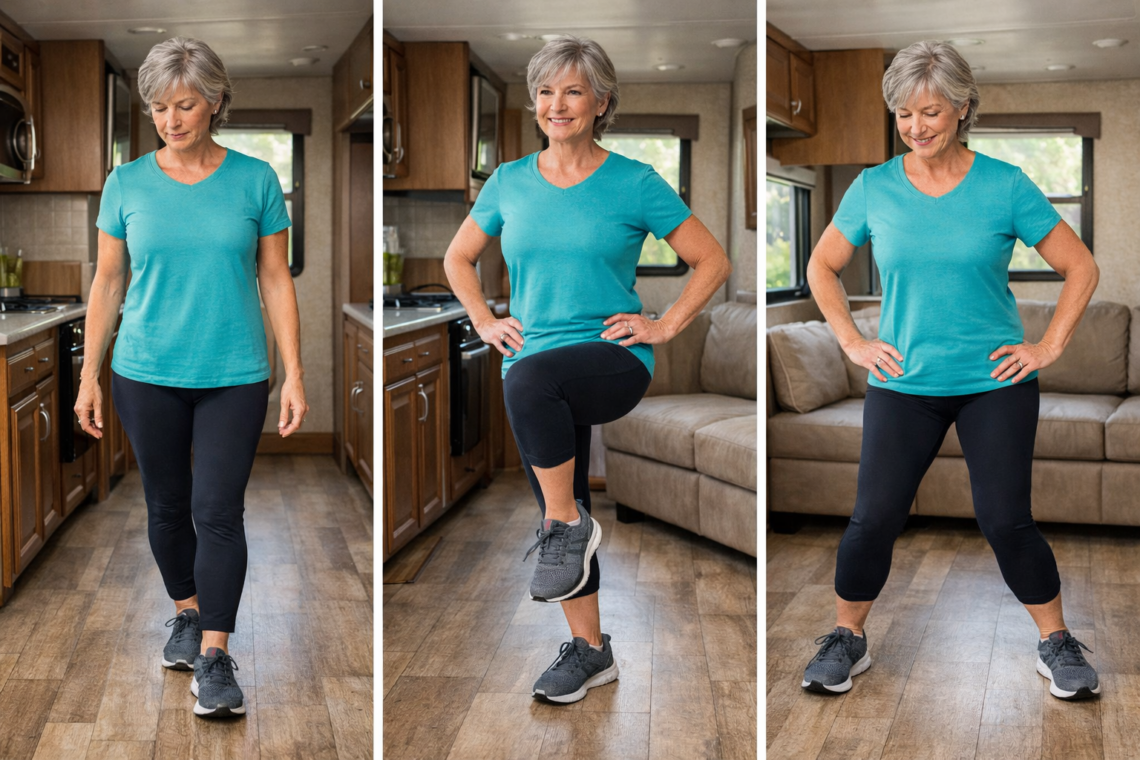
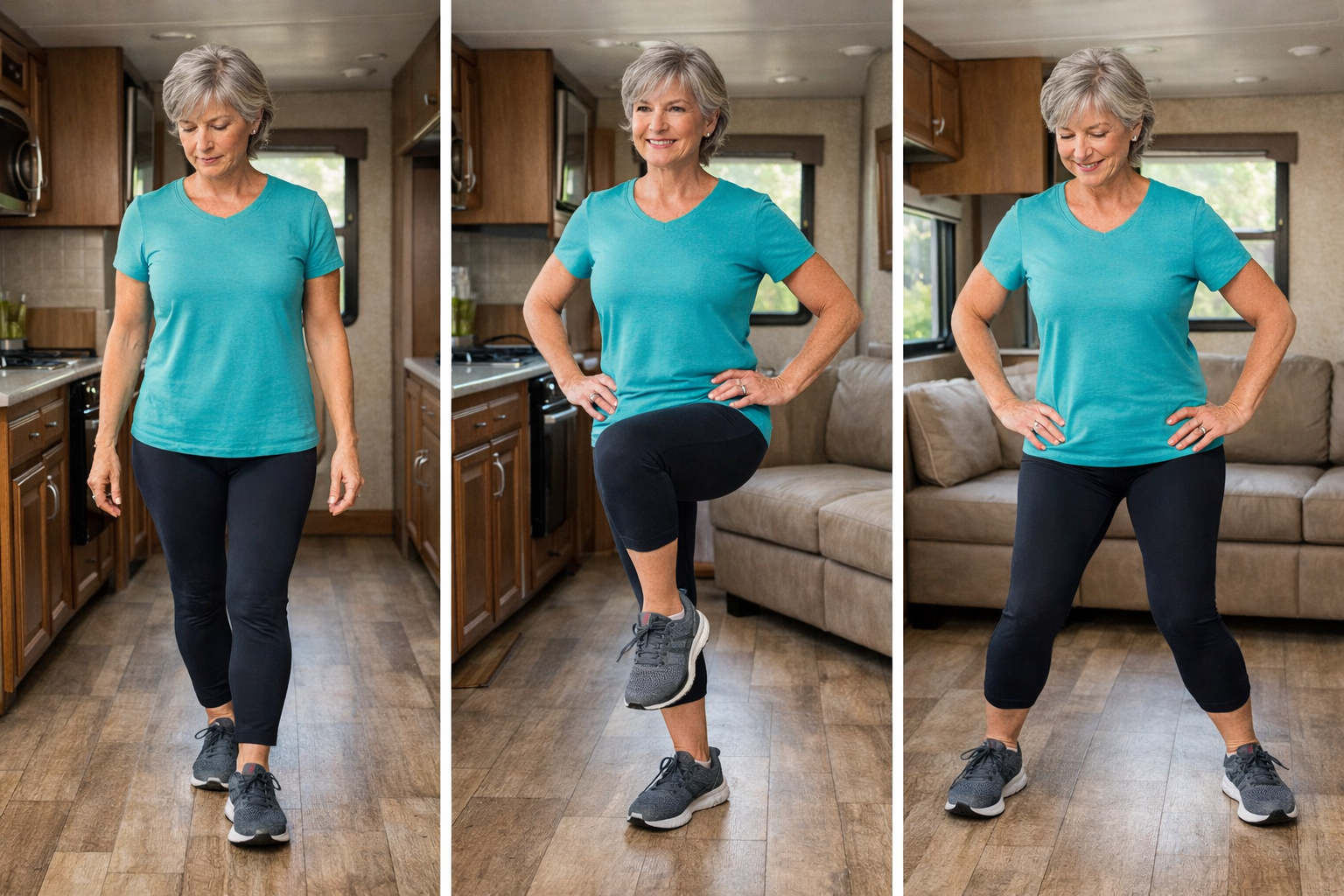
1. Heel-to-Toe Walk (10 steps)
Picture walking on a tightrope — slow and controlled.
RV-friendly benefit:
This helps with stepping down RV stairs, walking on narrow paths, and staying steady when your feet land on uneven terrain.
Arthritis + limited mobility options:
- ⭐ Shorten the stance: place your heel close to your toe (doesn’t have to touch)
- ⭐ Use a “counter glide”: fingertips on the counter the whole time
- ⭐ Do it in place: take 10 slow steps without fully lining up heel-to-toe
- ⭐ Seated version: Sit tall and slowly tap one heel in front of the other foot (like a seated “tightrope”)
2. Single-Leg Stand (10–15 seconds each)
Hold on at first. Build confidence, not fear.
Why it matters:
This trains the body for real life balance moments, like:
- stepping over campground hoses
- reaching into a cabinet
- stepping in/out of the shower
Arthritis + limited mobility options:
This one can feel scary — so here are safer ways:
Beginner-friendly levels (choose one):
- ⭐ Toe-tap balance: keep both feet down, but lightly tap one toe forward while most weight stays on the standing leg
- ⭐ Kickstand stance: one foot does most of the work, the other is barely touching the floor (like a bike kickstand)
- ⭐ Supported stand: both hands on the counter while lifting one foot just 1 inch
- ⭐ Seated balance option: Sit tall and slowly lift one foot 1–2 inches off the floor (alternate legs)
This still improves your brain’s balance system — even seated.
3. Weight Shifts (20–30 seconds)
Shift slowly side-to-side.
Why it’s a fall-prevention goldmine:
Most falls don’t happen while standing still — they happen during transitions:
- stepping aside
- turning to grab something
- walking on uneven ground
Weight shifts teach your body how to recover safely.
Arthritis + limited mobility options:
- ⭐ Micro shifts: tiny side-to-side shifts (your feet don’t need to move)
- ⭐ Hands-on support: hold a countertop or RV dinette
- ⭐ Seated weight shifts: sit tall and shift your ribcage over one hip, then the other (this builds trunk control and stability)
Bonus: 3 More RV-Specific Balance Builders (Gentle + Joint-Friendly)
If you want to expand the post further, these are PERFECT for arthritis and limited mobility:
⭐Sit-to-Stand (5 reps)
From the RV chair/dinette seat.
- strengthens legs
- improves stability
- helps with stairs and getting up from low seats
Arthritis option: Use hands on chair arms or counter.
⭐Supported Marching (20–30 seconds)
Hold the counter and lift knees gently.
Arthritis option: Lift only 1 inch — it still counts.
⭐Head Turns While Standing (10 slow turns)
Stand holding a counter, turn head left/right slowly.
This trains balance + vision together — HUGE for older adults.
Seated option: Do it seated with good posture.
Why This Matters for RVers
Balance is independence.
Good balance means:
- safer RV steps
- fewer “trip-and-catch-yourself” moments
- more confidence walking on gravel or hills
- easier setup days
- less fatigue
- less fear (which matters WAY more than people realize)
A Gentle Routine You Can Do Daily (1–3 minutes)
If you want to give them a simple plan:
⭐ Heel-to-toe walk – 10 steps
⭐ Toe-tap balance – 10 taps each side
⭐ Weight shifts – 30 seconds
That’s it!
Consistency beats intensity — especially with arthritis.
Quick Safety Tips for RV Life (especially with joint pain)
- Wear supportive shoes outside (campground ground is unpredictable)
- Use your RV grab bars — not furniture that can slide
- Step down slowly (rushing is where slips happen)
- Add motion-sensor lights at night (half of balance is vision!)
Happy RVing!
For other physical activity and fitness support for RV living go to healthyrving.com.