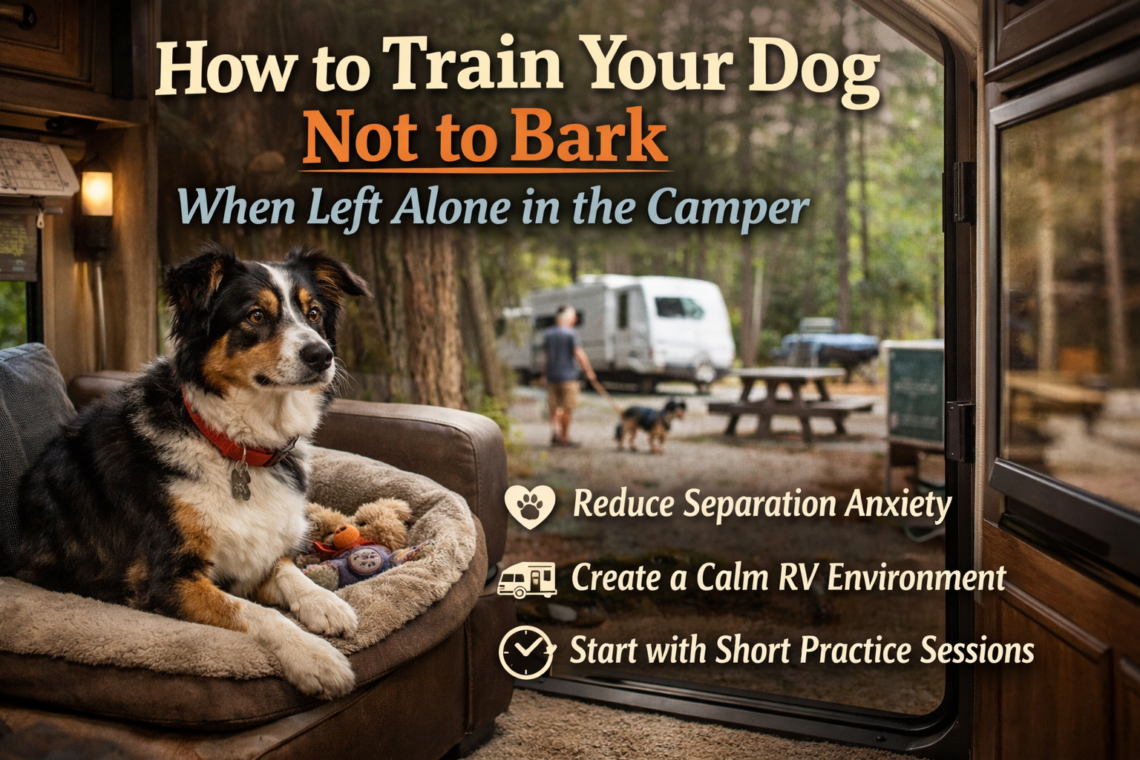
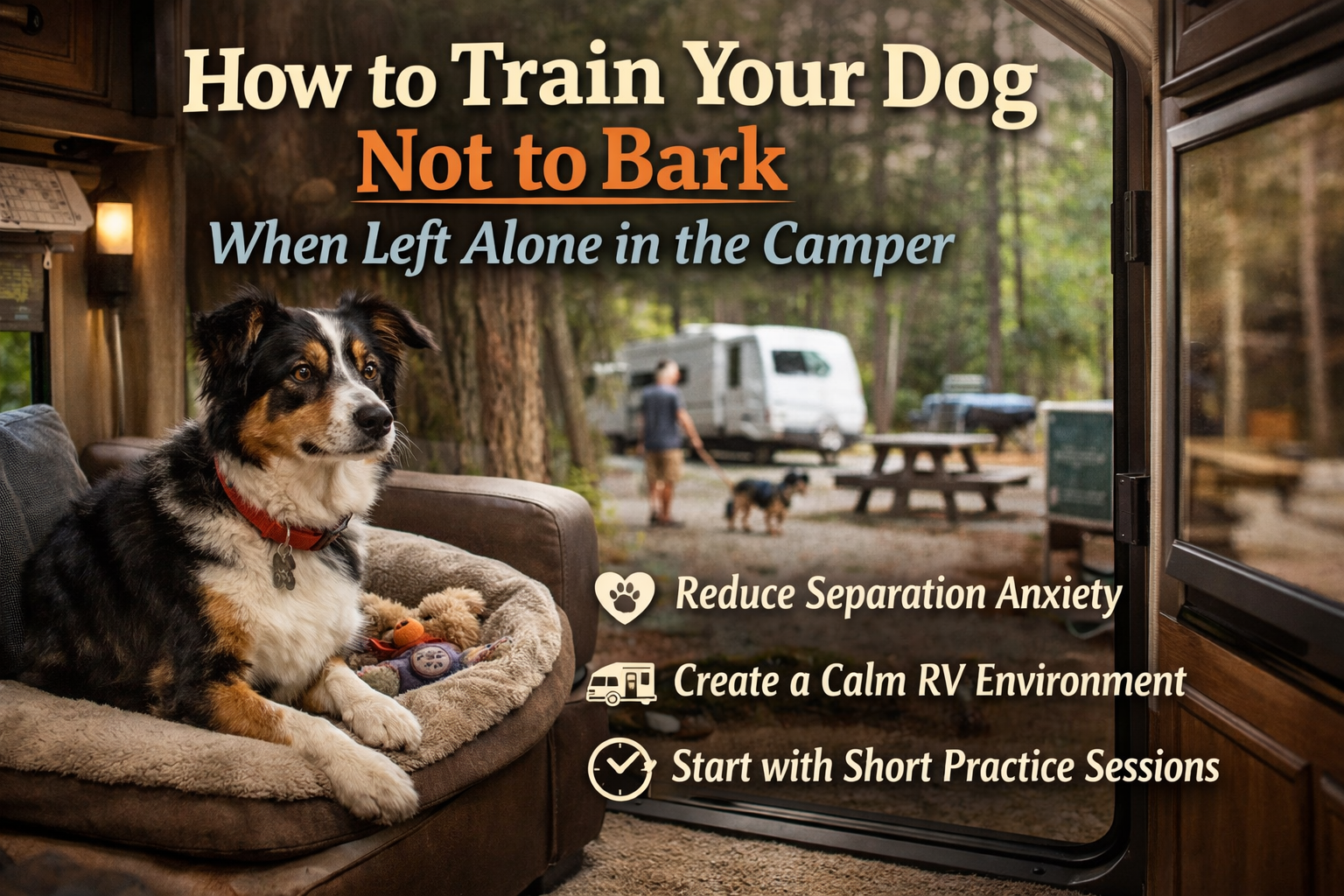
Living the RV life with a dog is one of the best parts of traveling—but barking when you leave the camper? Not so much. Whether you’re running into a store, heading out for a short hike, or grabbing dinner, a barking dog can stress you, your pup, and your neighbors in the campground.
The good news: barking when left alone is common, and it’s trainable. With patience, consistency, and the right approach, you can help your dog feel calm and secure when you step out of the camper.
Why Dogs Bark When Left Alone in an RV
Before you can fix the barking, it helps to understand why it’s happening. In a camper, barking is often triggered by:
- Separation anxiety (fear of being alone)
- New sounds (people walking by, other dogs, golf carts)
- Protective instincts in a small, unfamiliar space
- Too much pent-up energy
- Sudden changes in routine common with RV travel
Unlike a house, campers amplify outside noise—and that can make an already-alert dog feel like it’s their job to sound the alarm.
Step 1: Tire Them Out Before You Leave
A tired dog is a quieter dog.
Before leaving your camper, make sure your dog has:
- A solid walk
- Playtime (fetch, tug, sniffing games)
- A bathroom break
Mental exercise is just as important as physical exercise. Try:
- Short training sessions
- Puzzle toys
- Sniff walks around the campground
If your dog’s energy tank is full, barking is much more likely.
Step 2: Practice Leaving (Without Actually Leaving)
Many dogs start barking the moment they sense you’re about to go—shoes on, keys grabbed, door touched.
Practice desensitizing them by:
- Picking up keys and sitting back down
- Opening the door, stepping out for 5–10 seconds, then returning
- Gradually increasing the time you’re gone
The goal is to teach your dog: “They always come back.”
Keep arrivals low-key—no big greetings. Calm in, calm out.
Step 3: Create a Safe, Comfortable Camper Setup
Your dog should associate being alone in the camper with comfort, not stress.
Set up:
- A favorite bed or crate (only if they’re crate-trained)
- A worn shirt that smells like you
- Curtains or window covers to block visual triggers
- Soft background noise (fan, white noise, or calm music)
Many RVers swear by leaving a TV or radio on at low volume to muffle outside campground noise.
Step 4: Use Food as a Positive Distraction
Special treats should only appear when you leave.
Great options include:
- Frozen KONGs
- Lick mats
- Long-lasting chews (safe for your dog)
Licking and chewing are calming behaviors and can help your dog settle instead of bark.
Pro tip: Give the treat right before you walk out the door so they associate your departure with something positive.
Step 5: Don’t Accidentally Reward Barking
If you rush back in when your dog barks, they may learn:
“Barking brings my human back!”
Instead:
- Wait for a quiet moment before returning
- Keep departures and arrivals boring and calm
- Never scold after the fact—dogs don’t connect delayed punishment with barking
Consistency here is key.
Step 6: Start Small and Build Up Time Alone
Don’t jump from 2 minutes to 2 hours.
Practice leaving for:
- 1–5 minutes
- 10–15 minutes
- 30 minutes
- Longer outings
Use a pet camera or audio monitor if possible so you can track progress without guessing.
Step 7: Consider Extra Tools if Needed
If barking persists, you might try:
- Calming supplements (vet-approved)
- Thundershirt or anxiety wrap
- Professional dog trainer (virtual sessions work great for RVers)
If you suspect true separation anxiety, consult a veterinarian or certified trainer—this is more than just “bad behavior,” and help makes a big difference.
Be Patient—RV Life Is an Adjustment
Remember, campers are small, noisy, and constantly changing. Even well-trained dogs may struggle at first. Progress may be slow, but every calm minute counts.
With consistency, structure, and compassion, your dog can learn that being alone in the camper is safe—and quiet.
Final Thought
A calm dog makes RV life better for everyone: you, your neighbors, and most importantly, your pup.
Stick with the process, celebrate small wins, and enjoy the freedom of traveling without worrying about nonstop barking. Happy RVing!
For other physical activity and fitness support for RV living go to healthyrving.com.