
Why You Need It & How to Train It Without the Floor
Let’s clear something up right away: you do not need crunches or planks to build a strong core.
(Your wrists, neck, and lower back just breathed a sigh of relief.)
For a lot of RVers—especially ages 40–70+—traditional floor-based core workouts just aren’t realistic. Crawling down onto the floor inside a small RV? Not fun. Getting back up? Even less fun. And if you deal with arthritis, back pain, knee issues, balance concerns, or limited mobility, floor exercises can feel more stressful than helpful.
But here’s the good news: you can build real, functional core strength for RV life without ever touching the floor.
And honestly? That’s exactly what RVers need.
Because “core strength” isn’t about getting six-pack abs. It’s about being able to move confidently and safely on the road—climbing RV steps, carrying groceries, pulling out storage bins, twisting to reach cabinets, walking on uneven campground terrain, and standing strong during long travel days without your back screaming at you.
When your core is weak, RV life feels harder. You’re more likely to have back stiffness after driving, feel unstable stepping down, struggle with balance, or get worn out from everyday tasks like sweeping, cooking, and setting up camp.
That’s why this post is all about core exercises for RVers that are safe, joint-friendly, and actually useful for real life. You’ll learn how to train your core using standing movements, chair exercises, and wall-supported core work—perfect for small spaces and perfect for staying mobile and independent while living the RV lifestyle.
So if you want better posture, fewer aches, stronger balance, and more confidence moving around your rig, you’re in the right place. Let’s talk about what core strength REALLY means—and how to build it the Healthy RVing way.
What Your Core Really Is (and Why It Matters More Than Abs)
When most people hear the word core, they picture abs.
Maybe crunches. Maybe a six-pack. Maybe pain. 😅
But your core isn’t just your “front stomach muscles,” and it definitely isn’t only about looks.
Your core is really your body’s stability system.
It’s the group of muscles that helps you stay upright, balanced, and supported—so you can move safely without feeling wobbly, strained, or thrown off when life (or the campground) gets uneven.
Your Core Is More Like a “Support Belt”
Think of your core like a wide supportive belt that wraps all the way around your body:
- Front: your abdominal muscles
- Sides: your obliques (the muscles that help you twist and stabilize)
- Back: your deep back muscles that protect your spine
- Bottom: your pelvic floor
- Top: your diaphragm (yes, breathing counts!)
So instead of thinking “abs,” think:
midsection support + posture + balance + back protection.
Why Core Strength Matters So Much for RV Life
In a house, the floor is level. The steps are predictable. The counters are stable. The ground outside is usually normal.
In RV life? Not so much.
RVers deal with things like:
- stepping down onto gravel, dirt, grass, sand, or sloped pads
- climbing RV steps multiple times a day
- twisting in tight spaces (hello tiny bathroom + kitchen)
- lifting and carrying awkward things (hoses, bins, chairs, groceries)
- standing on uneven campground terrain
- long drive days that tighten hips and weaken posture muscles
That’s where your core becomes your best friend.
A strong core helps you:
- step down more steadily (less wobbling on RV steps)
- protect your back when lifting and reaching
- stay upright and balanced on uneven ground
- reduce back pain after driving
- move with confidence instead of bracing for discomfort
The Truth: A Strong Core Prevents the “RV Hunch”
You know that posture RVers sometimes develop after long drives?
Shoulders rounded. Head forward. Back stiff. Hips tight.
That’s not just “getting older.” That’s often weak core muscles failing to support posture—so the body collapses into the easiest position it can hold.
A strong core keeps you taller, more stable, and less achy—especially on travel days.
Core Strength Isn’t About Getting on the Floor
Here’s the biggest misconception:
People think core training means getting down on the floor to do planks, crunches, sit-ups, or twisting moves.
But for RVers (especially 40–70+), the best core training is actually functional:
- standing core exercises
- chair-supported core exercises
- stability movements that train balance and control
- moves that protect the spine instead of stressing it
Because the core’s real job is not “sit up and down.”
It’s to keep you stable while the rest of you moves.
And that kind of strength is exactly what keeps you mobile and independent on the road.
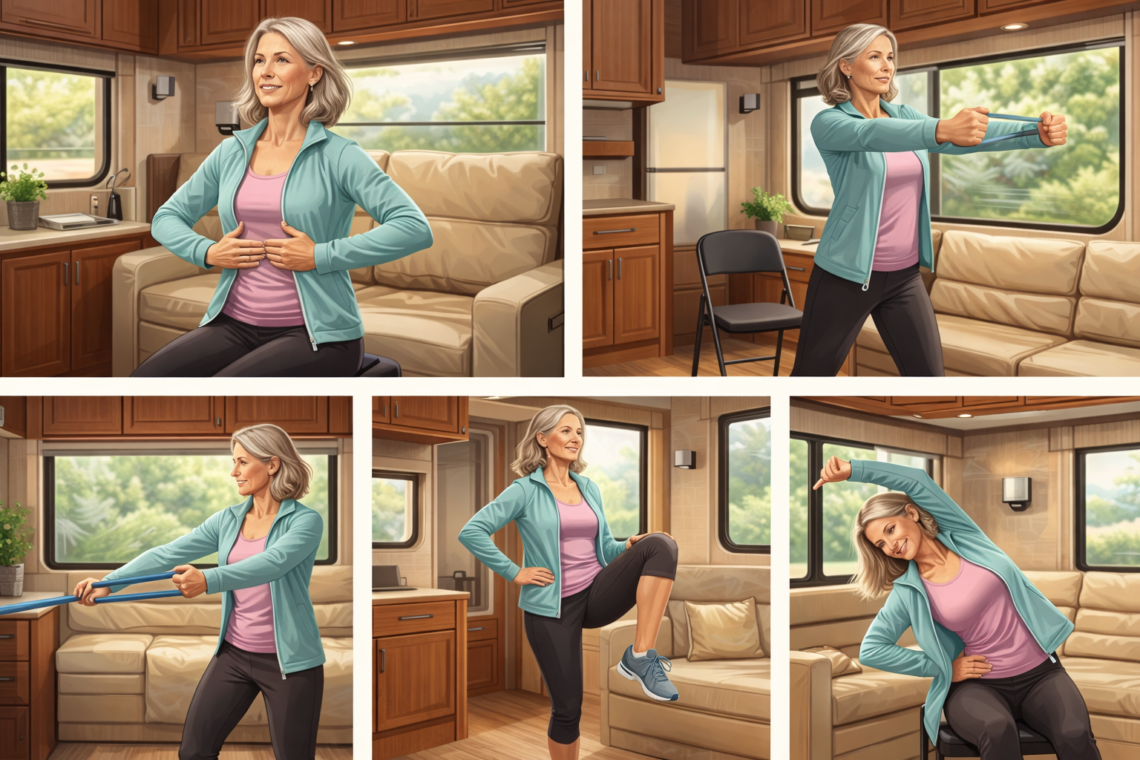
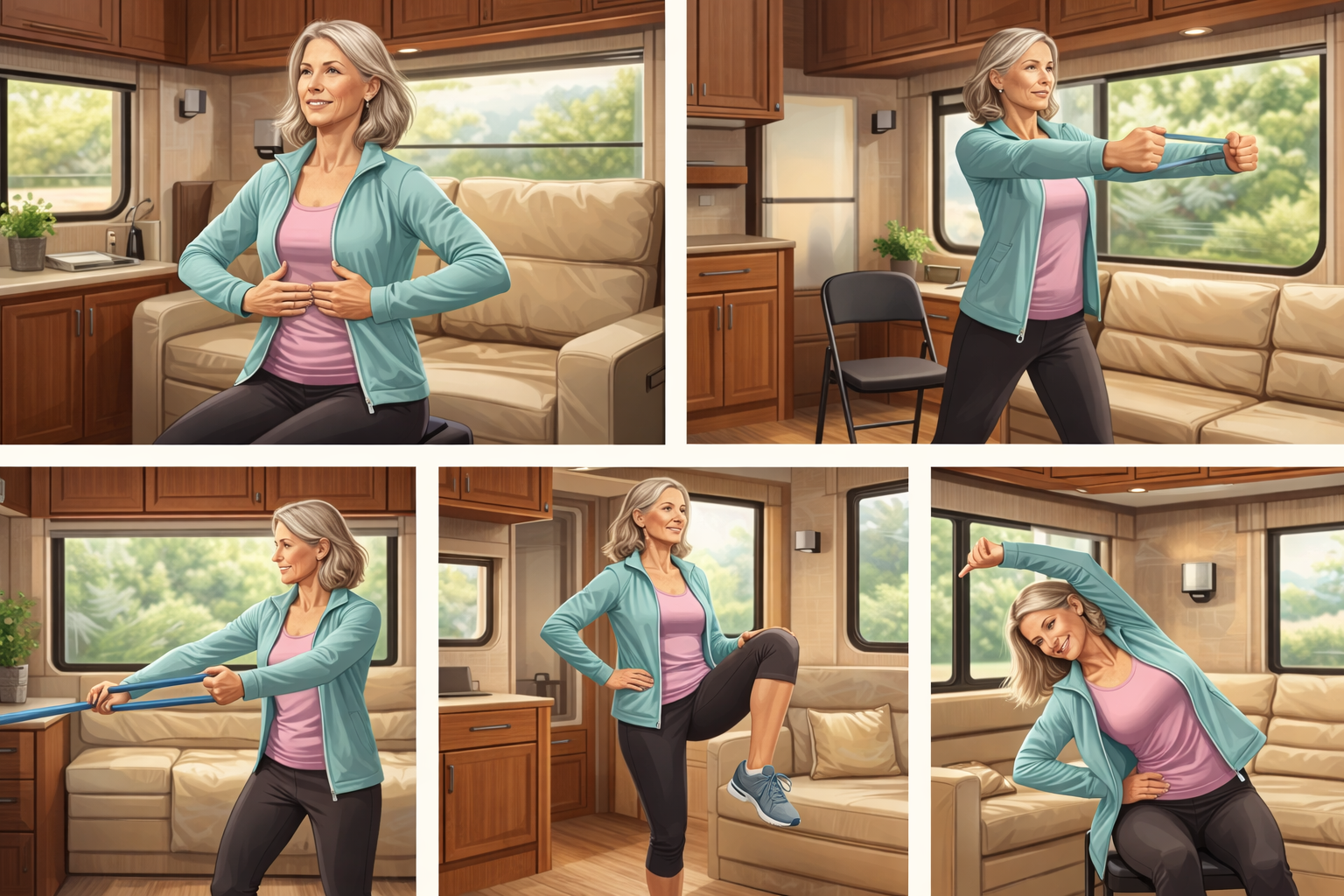
The Best RV-Friendly Core Exercises (No Floor!)
1. Seated Core Bracing (10 breaths)
Sit tall, gently tighten your belly, breathe into it.
Simple but powerful.
2. Standing Core Press (10 each side)
Press your palms into each other or into a wall.
Activates deep core layers.
3. Band Rotations (10–12 each side)
Slow twist, controlled movement.
4. Marching with Posture (1 minute)
Every lift = core engagement.
5. Seated Side Bends (10 each side)
Strengthens obliques safely.
Strong Core, Easier RV Life
A strong core makes RV life easier—plain and simple. When your core muscles are working with you, you’ll feel steadier on RV steps, more confident on uneven campground ground, and less achy after long drive days. The best part? You don’t need floor exercises, crunches, or planks to build real core strength. With simple chair-based, wall-supported, and standing core exercises, you can strengthen your midsection safely, improve balance and posture, and stay mobile and independent while living the RV lifestyle. Keep it consistent, keep it gentle, and let your core support every adventure ahead.
Happy RVing!
For other physical activity and fitness support for RV living go to healthyrving.com.