Simple, joint-friendly movement you can do anywhere—inside your RV or right outside the door
RV life is amazing… but your joints don’t always agree. 😅
Some days you wake up ready to explore. Other days your knees feel crunchy, your hips feel stiff, and your lower back acts like it slept on a rock (even if your mattress is actually pretty great). And if you’ve ever climbed down the RV steps thinking, “Who gave my body permission to feel 87 today?” — you’re not alone.
Here’s the good news: you don’t need intense workouts to stay strong and mobile while living the RV lifestyle. In fact, the best RV fitness plan—especially for adults 50–70+, or anyone dealing with arthritis, limited mobility, knee pain, hip pain, or back stiffness—is usually a low-impact, joint-friendly routine you can do consistently.
This post will give you exactly that: low-impact RV exercises that help you move better, feel better, and stay independent on the road—without stressing your joints or needing to get on the floor.
Friendly reminder: Always check with your doctor before starting any new exercise routine or workout program, especially if you have medical concerns or chronic pain.
Why RV Life Can Make Knees, Hips, and Backs Feel Worse
RV living naturally includes a few joint-unfriendly realities:
- Long drive days = tight hips + stiff spine
- Shorter walks = weaker legs + less circulation
- RV steps = extra knee and hip demand
- Small spaces = more twisting + awkward reaching
- Uneven campground ground = more balance strain
So when your knees or hips already feel sensitive, the RV lifestyle can amplify it—unless you balance it out with some smart movement.
That’s why low-impact exercise matters. We’re aiming for:
⭐ stronger legs without knee strain
⭐ looser hips (hello, easier RV steps)
⭐ a calmer back after driving
⭐ better balance for uneven ground
⭐ daily movement you can actually stick with
What “Low-Impact” Really Means (and Why It Works)
Low-impact doesn’t mean “easy” or “pointless.” It means:
- no jumping
- no pounding
- no fast twisting
- no deep painful knee bends
- no floor exercises required
Instead, you’ll use controlled movements that strengthen the muscles supporting your joints—especially your glutes, thighs, core, and upper back.
And that’s what makes your knees, hips, and back feel better.
Your Low-Impact RV Workout Rules (Joint-Friendly Version)
Before we dive in, here are three rules that keep this safe:
- Pain-free range only. Mild stretching and effort is fine. Sharp pain is a no.
- Slow wins. Control builds strength and protects joints.
- Support is smart. Use a chair, counter, or RV wall anytime you want.
A Simple 10-Minute Low-Impact RV Routine (No Floor Needed)
Do each move for 45 seconds:
Do this 3–5 days/week and you will feel the difference—especially with driving stiffness.
1) Seated March (Hip + core friendly)
Why it helps: wakes up hips, improves circulation, strengthens core without pressure on knees.
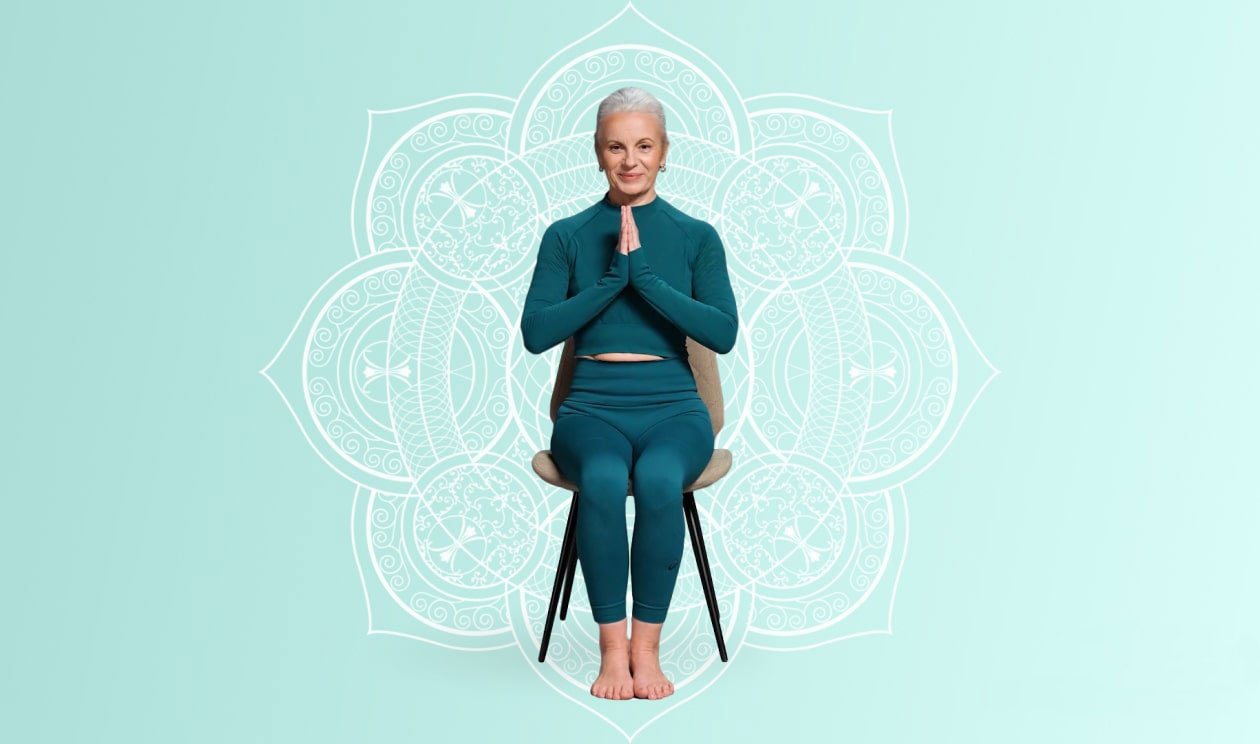
How to do it: Sit tall in a sturdy chair and slowly lift one knee, then the other.
Make it easier (arthritis/limited mobility): lift the foot just 1–2 inches off the floor.
Make it harder: add a longer pause at the top or keep toes pulled up.
2) Sit-to-Stand (Chair Squats) — the joint-friendly way
Why it helps: strengthens thighs and glutes (key for RV steps), improves knee stability.
How to do it: Sit in a chair. Lean forward slightly, press through your heels, stand up tall, then sit down slowly.
Make it easier: use hands on chair arms or thighs.
Bad knees option: do “half stands” (only come up halfway).
Back-friendly tip: keep chest lifted and hinge at hips, not the low back.
3) Supported Hip Hinge (Back saver)
Why it helps: strengthens glutes and protects the back during everyday RV lifting/reaching.
How to do it: Stand holding counter or chair. Push hips back like closing a car door with your butt. Slight bend in knees. Return to standing.
Limited mobility option: make it tiny—just a small hip shift back.
Make it harder: slow down the return and squeeze glutes at the top.
4) Heel Raises (Balance + ankle strength)
Why it helps: improves balance on uneven campground ground and supports stable walking.
How to do it: Hold onto counter. Lift heels up, pause, then lower slowly.
Arthritis option: do seated heel raises.
Bonus tip: slow lowering builds the most strength.
5) Seated Leg Extensions (Knee support strength)
Why it helps: strengthens quads (front thighs), which protect knees and help with stairs.
How to do it: Sit tall. Extend one leg, squeeze thigh, lower slowly. Alternate legs.
Bad knees option: keep the range small—don’t lock out the knee.
Arthritis option: do fewer reps with slower movement.
6) Standing Side Steps (Hip stability for knees + balance)
Why it helps: strengthens glute medius—one of the best muscles for knee support and balance.
How to do it: Hold chair. Step right, step together, step left, step together.
Arthritis option: smaller steps.
Make it harder: add a loop band above the knees.
7) Wall Pushups (Upper body strength without wrist pain)
Why it helps: strengthens chest, shoulders, arms—helps with pushing doors, stabilizing, and posture.
How to do it: Hands on wall at shoulder height. Lean in, press back.
Arthritis option: do this at the RV counter instead (less wrist bend).
Make it easier: stand closer to wall.
8) Seated Torso Twist (Back stiffness relief)
Why it helps: improves spinal mobility and reduces “I’ve been driving all day” stiffness.
How to do it: Sit tall. Rotate gently right, pause for a breath, return. Repeat left.
Arthritis option: tiny twist only—keep it comfortable.
Important: twist through ribs/upper back, not neck.
9) Gentle Knee-to-Chest (Seated hip release)
Why it helps: loosens hips and low back without getting on the floor.
How to do it: Sit tall. Lift one knee toward chest with hands behind thigh (not pulling on knee). Hold 2–3 breaths. Switch.
Limited mobility option: lift only slightly, even an inch helps.
10) Deep Breathing + Posture Reset (Pain relief secret weapon)
Why it helps: relaxes tight muscles, improves core support, reduces stress tension in back and hips.
How to do it: Sit tall. Inhale 4 seconds through nose. Exhale 6 seconds. Shoulders drop.
Arthritis option: support low back with pillow and focus only on breathing.
Limited Mobility + Arthritis Modifications (Quick Guide)
If you’re having a flare-up, a rough pain day, or fatigue:
- stay seated for most of the routine
- use smaller movements
- reduce time per move (20–30 seconds)
- focus more on breathing and posture resets
- stop before pain starts
Something is always better than nothing. Even 5 minutes keeps your joints happier.
Why These Exercises Help RV Steps (Big Bonus!)
This isn’t just “exercise.” This is training for real RV life.
These moves improve:
- hip mobility for stepping down
- quad strength for climbing up
- ankle stability for uneven ground
- core support for back protection
- balance confidence at campgrounds
Translation: RV steps become less sketchy.
Stay Mobile for the RV Life You Love
You don’t need high-impact workouts to stay strong on the road. If your knees are sore, hips are stiff, or your back is cranky, the best thing you can do is keep moving in a way that feels safe and doable.
With consistent low-impact RV exercises—especially chair-based, wall-supported, and standing movements—you can improve mobility, build joint-supporting strength, and feel more confident in your body as you travel.
Keep it gentle. Keep it simple. And keep showing up.
Because the goal isn’t to “work out harder.”
It’s to stay mobile and independent for every adventure ahead. Happy RVing!
For other physical activity and fitness support for RV living go to healthyrving.com.