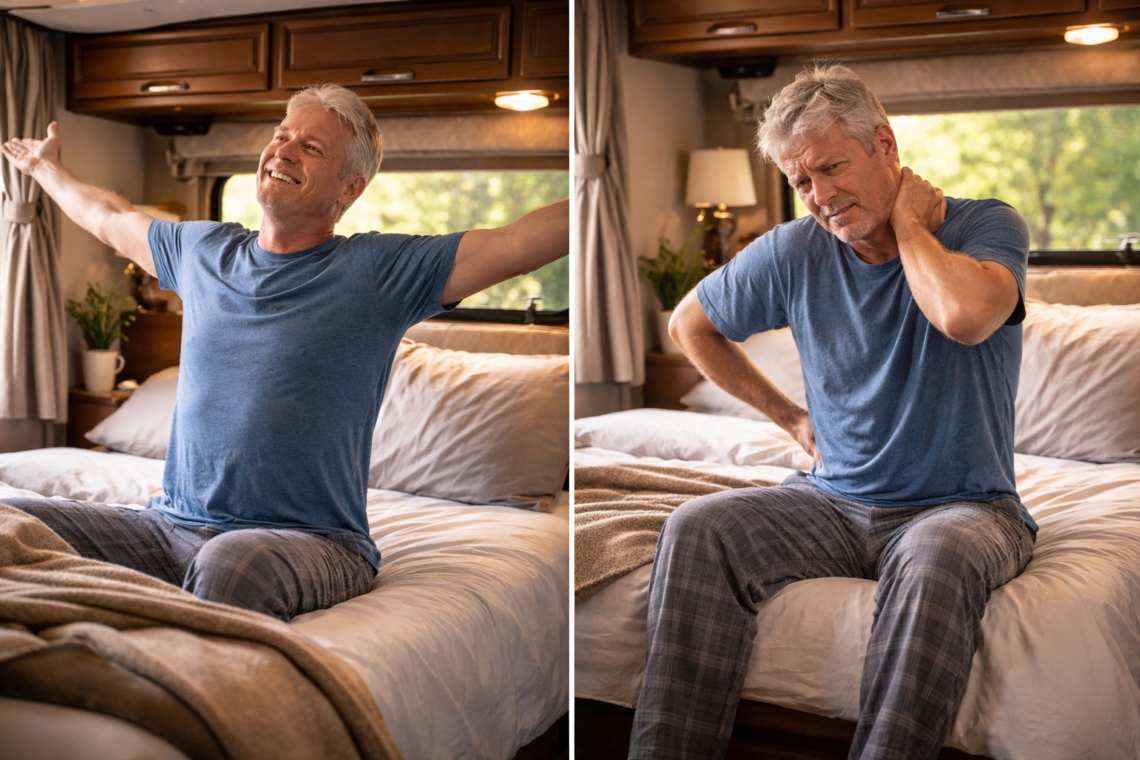
Your 10-Minute RV Morning Mobility Routine
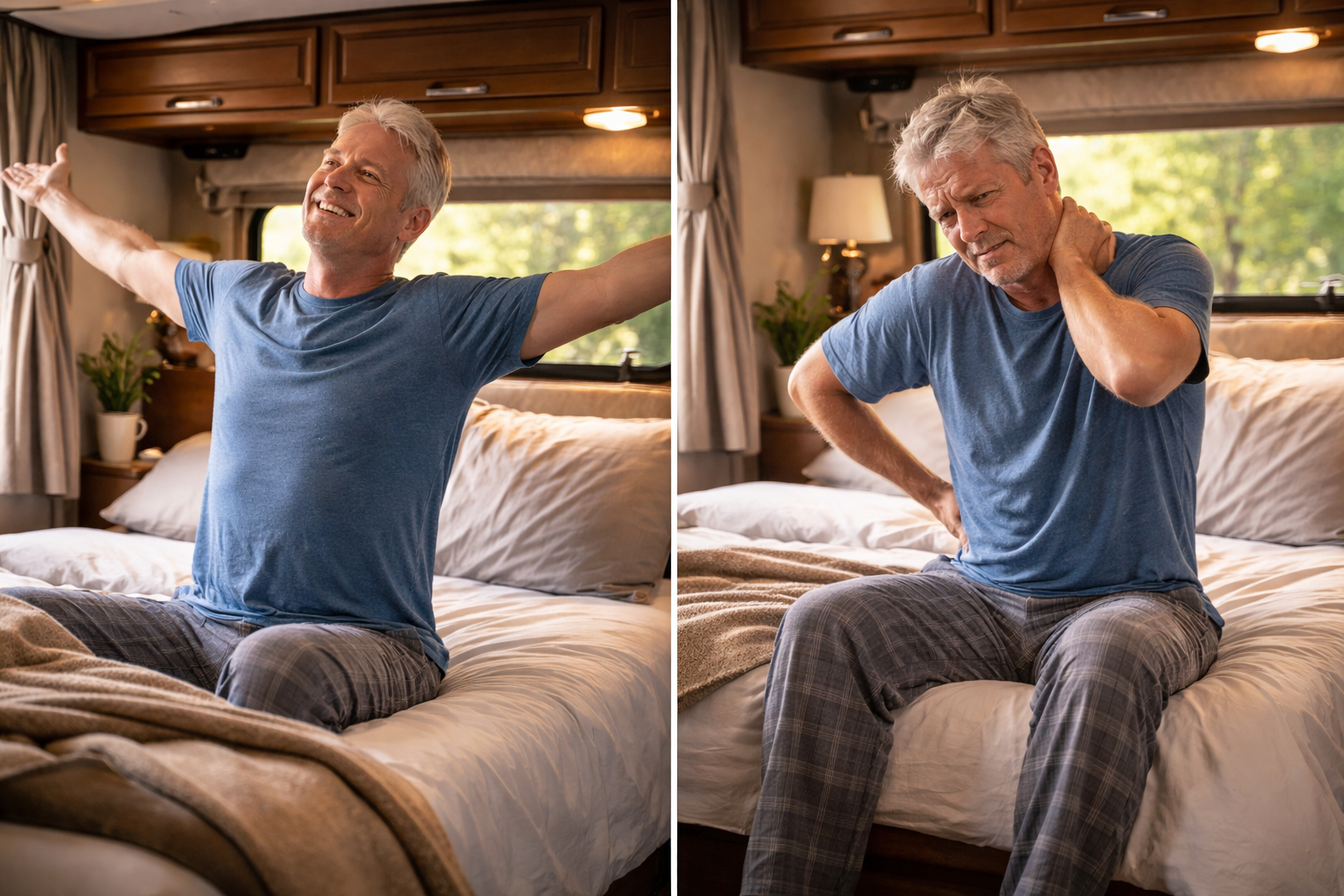
Mornings in the RV hit different.
Some days you wake up energized and ready to explore. Other days you step out of bed and your body is like… “Nope. Not yet.” Your hips feel stiff, your shoulders feel tight, your back feels cranky, and the first few steps feel a little creaky—especially if you drove a lot yesterday.
That stiffness isn’t a sign you’re “getting old.” It’s usually just your joints and muscles needing a little warm-up.
Here’s the truth: RV life is amazing—but it also creates sneaky patterns that tighten the body up. More sitting while driving, less walking than you think, and a lot of repeated movements (climbing steps, reaching into cabinets, twisting in small spaces). And when your mobility gets limited, everything becomes harder—from stepping out of the rig to hiking a short trail to simply standing at the stove without aching.
If you wake up stiff after a night in the camper or a long drive day, this RV Morning Mobility Reset is the perfect way to loosen up and feel better fast. RV life often means more sitting, tight hips, achy shoulders, and a cranky back—especially for adults 40–70 who want to stay active and independent on the road. In this post, you’ll learn a simple, joint-friendly 10-minute mobility routine you can do inside your RV with just a chair (no floor work needed) to improve flexibility, reduce morning stiffness, support balance, and make everyday RV activities—like climbing steps, walking the campground, hiking short trails, and standing at the stove—feel easier and more comfortable.
Why this routine works
It’s a simple 10-minute mobility reset you can do right inside your RV (no floor required). It gently wakes up your neck, shoulders, spine, hips, knees, and ankles—so your body feels smoother, steadier, and more “ready for the day.”
No complicated moves. No sweating. No equipment.
Just you + a chair + 10 minutes.
10-Minute Mobility Flow (30–45 seconds each)
Do each movement for 30–45 seconds, moving slowly and breathing the whole time.
1. Neck Circles (slow & gentle)
This helps loosen the tension that builds overnight and from driving, looking down at your phone, or sleeping in a different bed than home. Start seated tall, relax your shoulders, and make slow, small circles with your neck—like you’re moving through warm water. Keep it gentle and controlled.
Arthritis/limited mobility option: Skip circles and do half circles only (chin to chest → ear toward shoulder → return). Avoid rolling head back.
Tip: If you get dizzy or tight, skip full circles and do slow side-to-side half circles only.
2. Shoulder Rolls (forward + backward)
Your shoulders carry more stress than you realize—especially if you drive a lot or tend to hunch forward (most of us do). Shoulder rolls “unstick” the upper body, open up posture, and instantly help your neck and upper back feel better. Roll them slowly forward for about half the time, then reverse and roll backward.
Tip: The backward rolls usually feel the best—take your time there.
Arthritis/limited mobility option: Roll one shoulder at a time, or keep the roll very small and slow.
3. Seated Torso Twist
This movement wakes up your upper spine and improves rotation—something RVers use constantly when backing into sites, turning to grab things, or stepping in/out of the rig. Sit tall near the front edge of the chair and gently twist side to side, pausing for a breath at the end of each twist.
Tip: Keep hips facing forward and twist from ribs/upper back, not the neck.
Arthritis/limited mobility option: Hold the sides of the chair and twist only a few inches—tiny twists still help a lot.
4. Cat-Cow — but seated!
This is your spine’s “morning rinse cycle.” Cat-cow helps relieve stiffness in your mid-back and low back and gets your core gently involved. Place hands on your thighs. On the inhale, lift your chest and arch slightly. On the exhale, round your back and gently tuck your chin.
Tip: Move with your breath—it makes it feel 10x better.
Arthritis/limited mobility option: Make this a micro-movement—small chest lift + small rounding, staying within a pain-free range.
5. Hip Circles (standing or seated)
Tight hips are a BIG reason RV steps feel harder and balance feels wobbly. Hip circles help loosen hip joints and improve control through the pelvis. Standing: hold onto the counter and make slow circles like a hula-hoop. Seated: circle your hips around the chair.
Tip: Small circles are more effective than big sloppy ones.
Arthritis/limited mobility option: Do side-to-side hip shifts instead of circles (shift weight right, then left).
6. Hamstring Reach
Hamstrings get tight from sitting—especially long drive days. Tight hamstrings pull on your pelvis, which can make your low back ache and your steps feel stiff. Extend one leg out, heel down, toes up, and hinge forward with a long spine until you feel a gentle stretch behind the leg. Switch legs halfway through.
Tip: Think “chest forward,” not “head down.” Keep your back long.
Arthritis/limited mobility option: Keep the knee slightly bent, sit higher on a cushion, or reach only an inch or two forward.
7. Knee Lifts (standing or seated march)
This wakes up hip flexors, improves balance, and gets circulation moving. It also trains the muscles you need for climbing RV steps and stepping onto uneven ground. Standing: hold the chair and lift one knee, then alternate. Seated: march in place with tall posture.
Tip: Slow is better than fast—this is about control, not cardio.
Arthritis/limited mobility option: Do heel lifts or toe taps instead of knee lifts if hips or knees are sensitive.
8. Ankle Circles
Ankle mobility is a secret weapon for fall prevention—especially on gravel, uneven campsites, and RV stairs. Seated, lift one foot slightly and circle the ankle slowly in both directions, then switch sides.
Tip: Go slow and try to make the circle smooth (no jerky movement).
Arthritis/limited mobility option: Keep toes on the floor and gently roll the ankle in small circles without lifting the foot.
9. Side Bend Stretch
This opens up the ribcage and side body, which can get tight from sitting, twisting, and reaching in small RV spaces. Reach one arm up (or slide your hand down your thigh) and gently lean to the side. Hold for a breath or two, then switch.
Tip: Don’t twist—just lean sideways like a rainbow.
Arthritis/limited mobility option: Keep both hands down and slide one hand down your thigh as you gently lean to the side.
10. Deep Breathing + Posture Reset
This is the perfect finish because it calms your nervous system AND resets your posture. Put one hand on chest, one on belly. Inhale slowly through the nose for 4 seconds, then exhale for 6 seconds. After a few breaths, sit tall: lift chest, relax shoulders down, and imagine your head floating upward.
Tip: This one helps with stress, balance, posture, and “tight body” days.
Arthritis/limited mobility option: Sit back with pillow support behind low back and focus only on the breathing.
Quick Safety Note
If any movement causes sharp pain, tingling, or dizziness—skip it and stick with the ones that feel good. Mobility should feel like gentle relief, not strain.
Always consult with your physician before beginning any exercise routine or workout program, especially if you have any medical conditions, injuries, or concerns.
For other physical activity and fitness support for RV living go to healthyrving.com.