How to Prevent Slips, Trips & “Whoops!” Moments
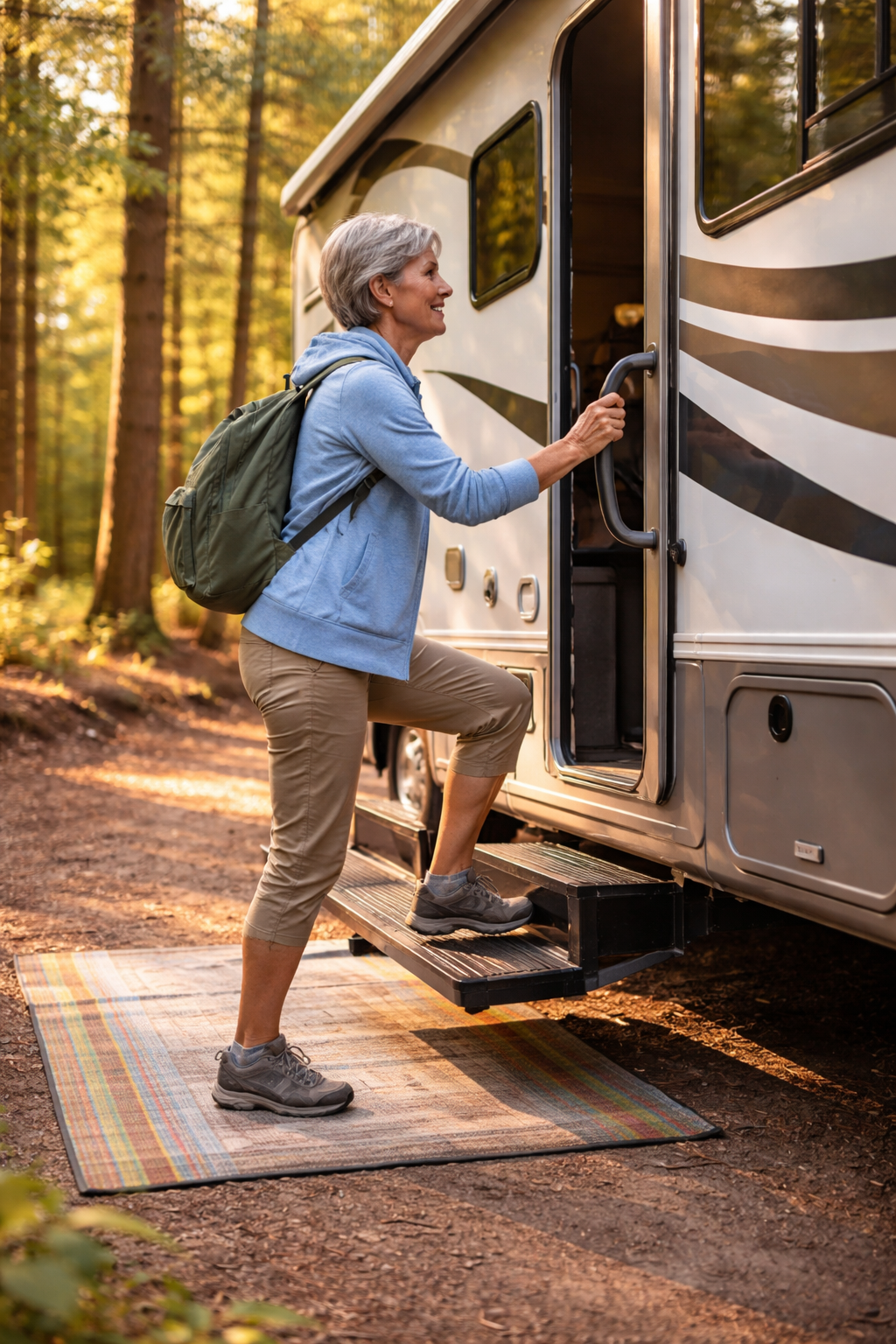
Ah yes… the RV steps.
That little mini-staircase that looks harmless—until it isn’t.
One second you’re stepping down like a champ… and the next you’re doing that awkward “save yourself” shuffle because the ground is uneven, the step is higher than you expected, or you’re carrying three bags, a cup of coffee, and the dog leash like you’re training for an Olympic event.
And RV steps have a special talent for catching you off guard. Maybe your foot lands slightly sideways. Maybe there’s a slick patch from rain or morning dew. Maybe the lighting is dim and the bottom step blends into the shadows. It only takes one wrong step for a slip, a twisted knee, or a hard fall—especially if your balance isn’t what it used to be.
So let’s talk about what we can do to feel safer on the RV steps and prevent slips and falls, because falls are not just “oops” moments. They can derail an entire trip, and they’re one of the easiest things to prevent with a few simple upgrades and habits.
Why RV Steps Are a Common Fall Zone
RV steps are one of the most common danger zones because they’re basically designed to challenge balance. They’re often narrow and steep, which means you have less room for your foot and less time to adjust as you move. On top of that, the step height can vary depending on the rig and the campsite slope, so you don’t always get the same predictable “rise and run” like you do with normal home stairs.
Lighting is another big issue. Campground lighting is rarely consistent, and RV step areas can end up shadowy or dim—especially at night or early morning. Add in uneven ground (gravel, grass, soft dirt, potholes, or sloped pads) and suddenly that final step down becomes the most risky part of the whole process.
Weather makes it even worse. Rain, frost, dew, mud, sand, and even wet shoes can turn RV steps into a slip-and-slide. And the final ingredient in the perfect storm? Fatigue. When you’re tired—after driving, hiking, setting up camp, or just living life—your balance, reaction time, and focus drop. That’s when “quick steps” become risky steps.
3 Step-Safety Habits Every RVer Should Use
1. Pause Before You Step
This sounds almost too simple, but it’s one of the most powerful safety habits you can build. RV steps are unpredictable — the ground might be lower than you expect, sloped, soft, or uneven. And if you’ve been driving, your body can feel stiff and your brain can be slightly “foggy,” especially when you’re in travel mode or distracted.
That 1–2 second pause gives your nervous system time to do what it’s designed to do: scan, measure distance, and adjust. You’re letting your eyes check where the step edge is, whether the mat is curled, whether the bottom landing is gravel or mud, and whether your footing is secure.
Think of it like this: most falls don’t happen because people are weak — they happen because people are rushing. A short pause prevents that “auto-pilot step” that leads to slips and ankle rolls.
A helpful cue: Pause → Look → Hand → Step.
2. Use Both Hands When You Can
Even if you feel “fine,” using your hands is smart. RV steps aren’t normal stairs. They bounce a little, they can be narrow, and they often lead to ground that shifts underneath you. That means your balance has to work overtime.
Using a handrail (or touching the RV frame or handle) instantly improves stability because it creates a third point of contact. Your body becomes more secure and your brain feels safer — which means you move with more control instead of bracing for impact.
Also: most people wait to use the rail until they feel wobbly. That’s backwards. You want to use the rail so you don’t get wobbly in the first place.
And if your hands are full? That’s your red flag. If you’re carrying bags, food, coffee, dog leash, phone, and your dignity all at once… you’re basically making RV steps harder than they need to be.
A simple rule: One hand free. Always.
3. Step Down Strong
This is where confidence comes from. When people feel unsure on steps, they tend to “drop” down quickly, collapse into the knees, or let the body flop downward. That floppy descent makes your ankles work harder, throws your balance off, and makes it easier to land awkwardly.
Instead, you want to step down like you mean it — controlled, steady, and strong. Your hips and core should be doing the work, not just your knees. Imagine your glutes and thighs gently “braking” your descent as you step down.
This matters even more if you deal with arthritis or knee pain, because control reduces jarring impact. You’re not falling down the steps — you’re lowering yourself down the steps with strength.
A great cue: “Quiet feet.”
If your foot hits the ground with a loud thud, you’re dropping. If it lands quietly, you’re in control.
Strength Moves That Make Step Navigation Easier
If RV steps feel intimidating, it’s often not about the steps themselves — it’s about what the steps require from your body: leg strength, ankle stability, balance, coordination, and confidence.
That’s why these three simple strength moves make such a big difference. They teach your body how to support you, stabilize you, and move with control. And the best part? You don’t need a gym. You can do them right inside your RV (or right outside it) with a chair and a little space.
Always consult with your physician before beginning any exercise routine or workout program, especially if you have any medical conditions, injuries, or concerns.
Chair Squats
Chair squats are one of the best “real-life strength” exercises for RVers because they build the exact muscles you rely on for step navigation: thighs, glutes, and core. That strength is what helps you step down without collapsing, climb up without pulling on the door handle, and move without fear.
Chair squats also improve something most people don’t think about: hip control. Strong hips help keep your knees tracking properly and help you stabilize when the ground is uneven.
Start by sitting down and standing up from a sturdy chair slowly. The goal isn’t speed — it’s control. As this gets easier, you can tap the chair lightly instead of fully sitting.
This move directly helps with:
- stepping down without knee strain
- stepping up without yanking yourself upward
- stability when the step feels bouncy or steep
Arthritis + limited mobility options:
If knees are cranky or standing is uncomfortable, start with sit-to-stands using your hands on the chair arms or thighs for support. You can also do half squats by only standing up halfway, then sitting back down slowly. Keep the movement small, pain-free, and controlled — even a few reps builds confidence.
Heel Raises
Heel raises look small, but they’re huge for balance. They strengthen your calves and ankles, which are your first line of defense when you step onto gravel, grass, or uneven terrain.
Weak ankles are one of the biggest reasons people feel shaky stepping out of an RV. When your ankles don’t stabilize quickly, your body overcorrects — and that’s when you wobble, stumble, or catch yourself at the last second.
Heel raises train ankle strength and helps your brain feel more confident in foot control. You can do them holding the kitchen counter or chair back. Go slow. Pause at the top. Lower with control.
This move directly helps with:
- steadiness on uneven campground ground
- preventing ankle rolling or foot slipping
- stronger push-off when climbing steps
Arthritis + limited mobility options:
If standing is tough, do seated heel raises in a chair: keep toes on the floor and lift your heels up and down. If ankle stiffness is an issue, move slowly and focus on range you can control. You can also do one foot at a time to reduce strain and improve balance safely.
Step Taps
Step taps are like “training wheels” for RV step confidence. They teach your brain accurate foot placement — which is a big deal because a lot of step slips happen from misjudging the edge of the step.
With step taps, you practice lifting your foot and tapping a target (a low step, a book, or the bottom RV step) without fully transferring weight. This builds coordination, balance, and confidence without risk.
It’s not just strength — it’s brain-to-body communication. The more you practice this, the less your feet feel clumsy, especially when you’re tired or distracted.
This move directly helps with:
- improving foot accuracy on narrow steps
- reducing hesitation and second-guessing
- training safer movement patterns over time
Arthritis + limited mobility options:
Use a very low target like a book, small step, or even a folded towel. Hold the counter or chair for support and make the tap small—just lift the foot slightly and tap. If hip or knee flexion is limited, switch to toe taps forward on the floor instead of lifting onto a step.
You Deserve to Feel Confident on Your Steps
You shouldn’t have to brace yourself every time you enter or exit your RV. You deserve to feel steady. Strong. In control.
No wobbling.
No awkward “grab-the-doorframe” panic.
No second-guessing every campsite landing.
Just confident, smooth movement — so you can focus on enjoying the trip, not fearing the steps.
Happy RVing!
For other physical activity and fitness support for RV living go to healthyrving.com.